Picture this: You open up your closet ready to get dressed, only to find you apparently have nothing to wear. But wait; when did your dresser drawers become too full to close? I have a question for you: Are you tucking enough?
Okay, okay. Before you stop reading in disgust, hear me out. I know this advice sounds like exactly the opposite of the revolutionary style inspiration you came here to read.
You opened up this article expecting tips to help you elevate your wardrobe and I’m giving you advice about; what, precisely? Tucking in shirts?!
Please.
As if I don’t have enough to talk about without resorting to basic fashion-skills 101.
Yet, believe it or not, this “secret” is what drastically changed the way I approach getting dressed every single day. Because it’s not really about tucking in your shirt so much as… strategically not-tucking in your shirt.
Since discovering this embarrassing lack of excess fabric in my wardrobe last year, I’ve become kind of mildly obsessed with how simple partial tucks can make even the cheapest, most boring clothes look expensive; and intentional. Hear me out: I was working on a story about styling Target basics to look expensive last summer when I stumbled upon this trick. I swear, it was one of those magical lighting-bolt moments where something so simple you’re angry with yourself for not figuring it out sooner suddenly clicks into place.
I was trying out outfit combos that theoretically looked expensive but in reality just looked like Target: budget-friendly basics that definitely did not photograph like billion-dollar brand clothes. I was getting frustrated, the photographer was glancing at his watch, and I only had about half a minute until I pitched the whole idea and we just packed up and went home defeated. (Hey, speaking as a seasoned freelance writer: If you’ve got wardrobe stories, we have feelings too.) On a whim, I started messing around with the tucked-in plainer-than-basic white button-down I was wearing with some straight-leg jeans. Typically I’d either fully tuck it in (teacher look, yikes) or leave it totally untucked (super cozy, but messy).
But what if, I thought, crossing and re-crossing my fabric over my waistband like a sadhop….. “It’s done,” the photographer interrupted, clutching his chest. “I think we’ve got the shot.” Sure enough, when he posted it on the camera, my ugly-dr uggly basic outfit; with nothing but jeans, a white tee, and flat sandals; was one of our most pinned Pinterest posts all month.
How? Despite the fact that not one piece I was wearing was remotely luxe, somehow that off-kilter tuck made my outfit look expensive. Like, actually.
I didn’t just feel like it looked expensive. Anyone who saw the picture would know to describe my outfit that way. Something about that intentionally messy partial tuck made my outfit go from looking basic-bummy to high-fashion fancy.
It was a total game changer. Ever since that day I’ve been…well, kind of quietly obsessed with how one stupid little tuck can make your clothes feel more expensive. I tested it out on different body shapes (yes; including my own humble, XL-disproportionated self), on budget-friendly clothes versus higher-end pieces, on sundresses, blouses, jeans…you name it.
And do you know what always happened? “It works every time,” says celebrity stylist Vanessa Chen, who has worked with the likes of Tracee Ellis Ross and Kym Kelly. “Asymmetry always makes something look more high-fashion.
When something is completely tucked or untucked, it kinda just looks like that’s how the person bought it from the store. But the act of partial tucking is an intervention. It shows that someone who knows how proportions work put thought into that garment.” Basically, when we see something that’s intentionally uneven, our brains register that as “someone spent time on this” rather than “I just threw this together while bumping boobs.” When you tee fully tucked, it could’ve been done by anyone who can pass the grade-school dressing test.
But throwing on a shirt with uneven hemlines requires actual spatial awareness and a certain confidence with your proportions. It implies that whoever’s wearing it actually knows something about style. “It’s fashion’s version of the “effortless bun” hair look,” Chen continues.
“Looks like you threw it on, but actually took you an hour to perfect.” And it works for all types of bodies, silhouettes, and clothing. Doesn’t matter if you’re pear-shaped or apple-bottomed, short or tall, like boyfriend jeans or skinny trousers: There’s a version of partial tucking that will work for you and your wardrobe. Below, I break down the easiest ways to trick folks into thinking you spent waaay more money at the mall than you actually did.
The Front Tuck/ French Tuck: Named coined by Queer Eye fashion-extraordinaire Tan France, the idea is simple: Tuck only the front half of your top, leaving the sides and back hanging free. Works great with boyfriend tees and oversized jumpers/tops, especially when you pair it with high-waisted trousers or skirts. Creates the illusion of longer legs by keeping your shirt relaxed at the bottom.
Pro tip? Try it with a shirt that has ties on the side; it creates a similar effect and looks extremely on-trend right now. The Side Tuck: This one’s fairly self-explanatory: Instead of tucking in the front-centre of your shirt, only tuck one side.
It creates a really cool uneven hemline that works best with button-downs and stiffer fabrics that will hold a cleaner fold. The Half and Half: Tuck all of the front of your shirt, but leave the back portion completely untucked. Lovely for those longer shirts you might want to wear with leggings or skinny jeans, as it still gives you coverage in the back while creating a waist in the front.
The Sexy Bunch: This isn’t technically a tuck, per se, but rather gathering some of your shirt fabric and letting it “settle” naturally at your waist. It works well with thicker fabrics that might bunch up too much if you were to tuck them, or wispy fabrics that won’t create a bunch-y silhouette when left loose. For proof of just how dramatic this styling trick can make even the most basic get-ups look, I pulled a few before-and-afters from my own closet.
Note: I was shocked at how dramatic this trick was; because I knew it would work, I wasn’t sure how noticeable the difference would be with something so simple. But guys. I don’t care how fancy your shirt is: try this trick and watch how it instantly elevates the entire vibe of your outfit.
You Might Also Like
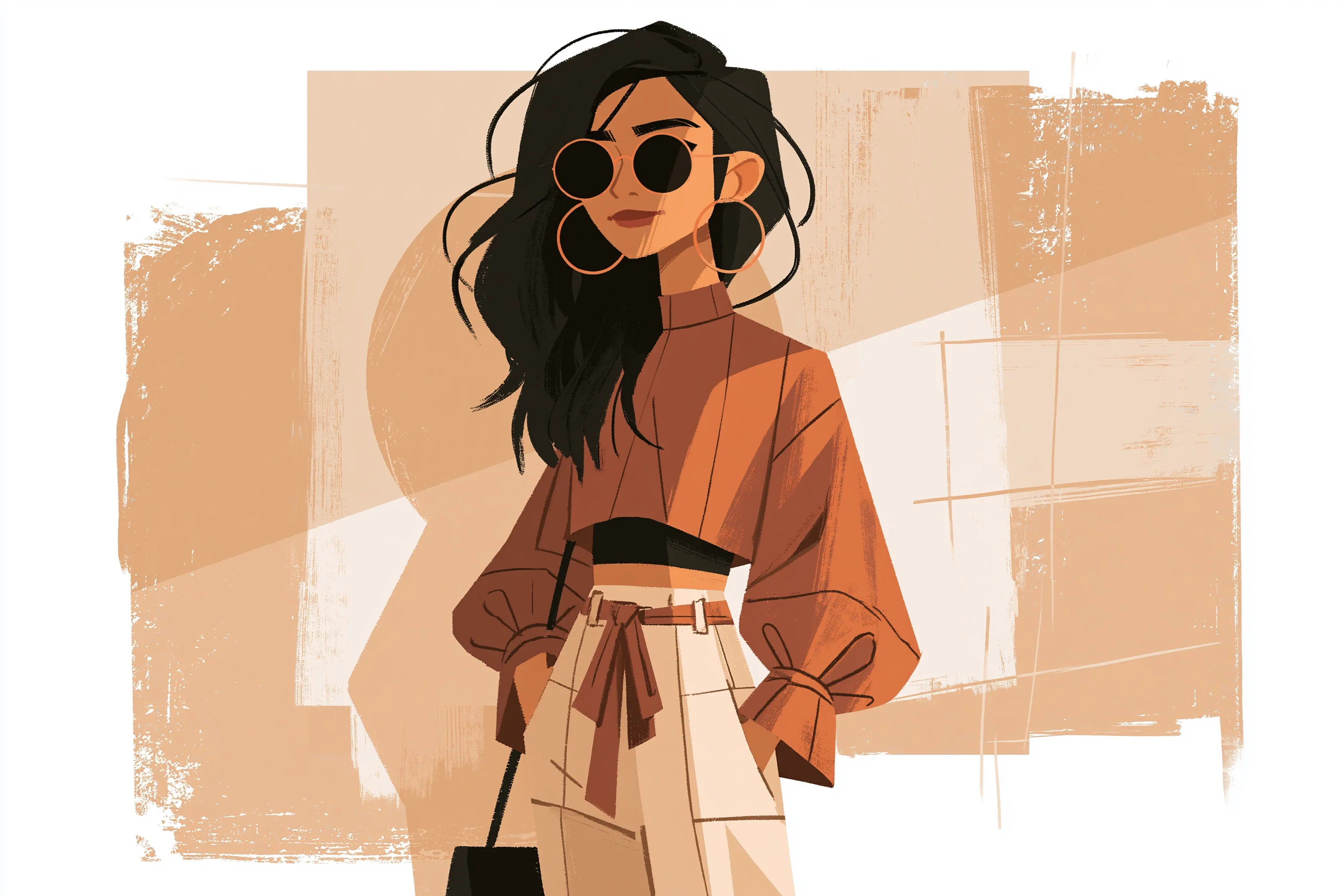
Example No. 1: The Basic Button Down Before: Same boring white button-down from Uniqlo, untucked over some boyfriend jeans. Safe.
Simple. Doesn’t make much of a shape. After: I tuck in just the front half of the shirt, leaving the sides out.
It creates more of a waist, some visual interest with the uneven hemline, and now my shirt looks expensive AF. No joke. Example No.
2: The Oversized Jumper Before: Classic big-box-store chunky knit jumper, untucked. It’s cozy, but also super lazy. You know you wore this because you didn’t feel like changing out of your pyjamas.
After: I partially side-tuck my jumper, only pulling enough fabric through the waistband that it creates some definition, but not so much that it looks too “done.” Suddenly my jumper looks expensive; maybe even from Anthropologie? Example No. 3: The Tee & Midi Dress Before: A classic white tee turtleneck, fully tucked into a midi skirt.
Simple, but somewhere between blah and hard. The whole ensemble just screams “required dress code.” After: I do a partial front tuck, but bunch the fabric as I pull it through my waistband, giving it a nice little blousey look when it hangs. This looks more like “I know how to style a basic,” versus “my boss makes me dress nice.” But here’s the thing about this trick: It doesn’t cost anything.
You don’t need any special skills. And you can use it with clothes you totally already own. It’s as budget-friendly as shopping hacks come.
Don’t believe me? I did some digging. “As more people are shopping at H&M, Zara, Target, etc. for affordable basics to build their wardrobe, they need ways to make those pieces look invested in,” says fashion forecaster extraordinaire Tracy Morales. “Everyone loves a luxury item, but those won’t fit most budgets. So if you can trick the mind into believing it’s a high-end piece because of how you’re wearing it, you’ve won.” Nothing feels more unfair these days than seeing something cute in the store only to try it on and realise it costs $100.
Inflation is no joke, and we all have fewer dollars to blow these days. So if you’ve got a trick to make a $10 shirt look like a $100 one, I’m all ears. I picked out three totally identical white T-shirts from H&M, Madewell, and one from a boutique brand I can’t name for legal reasons.
They all retailed for $9.99, $35, and $90 respectively (holla at your local discount retailer, I know). When I wore each one untucked with a pair of jeans, you could definitely tell which was which. The cheaper shirt was thinner, more transparent, and didn’t have as much structure in the shoulders.
But after I partial tucked each shirt? Damn. You’d be hard-pressed to tell them apart.
And that $10 shirt from H&M now looks way more expensive than my comfy go-to tank that costs twice as much. “It tricks the eye into focusing on the styling rather than the garment itself,” Chen says. “Instead of looking at the shirt, they’re going to wonder why you tuck that way. It shifts the focus!” Of course, it’s not a perfect science. A $15 polyester blouse will never look exactly like its $150 silk cousin simply by employing the art of partial tucking.
But it certainly looks more expensive than it did before, and that’s what counts. This trick has even changed the way I shop these days. Rather than trying to overspend on pieces that attempt to look luxe-but-budget (they usually end up falling flat), I scope out cheap basics that can be manipulated into looking expensive simply by playing around with how I wear them.
Oversized shirts that I can tuck creatively. Delicate fabrics that I can bunch and pull in certain ways to flatter my figure. Pieces with clean lines that I can tweak to create my own unique style. “The material and construction of fast fashion can’t compete with luxury brands,” Chen says. “So when you copy the same exact style or silhouette, it’ll always look cheap.
But simple pieces that give you an opportunity to style them differently?
Now you’re on to something.” Trust.
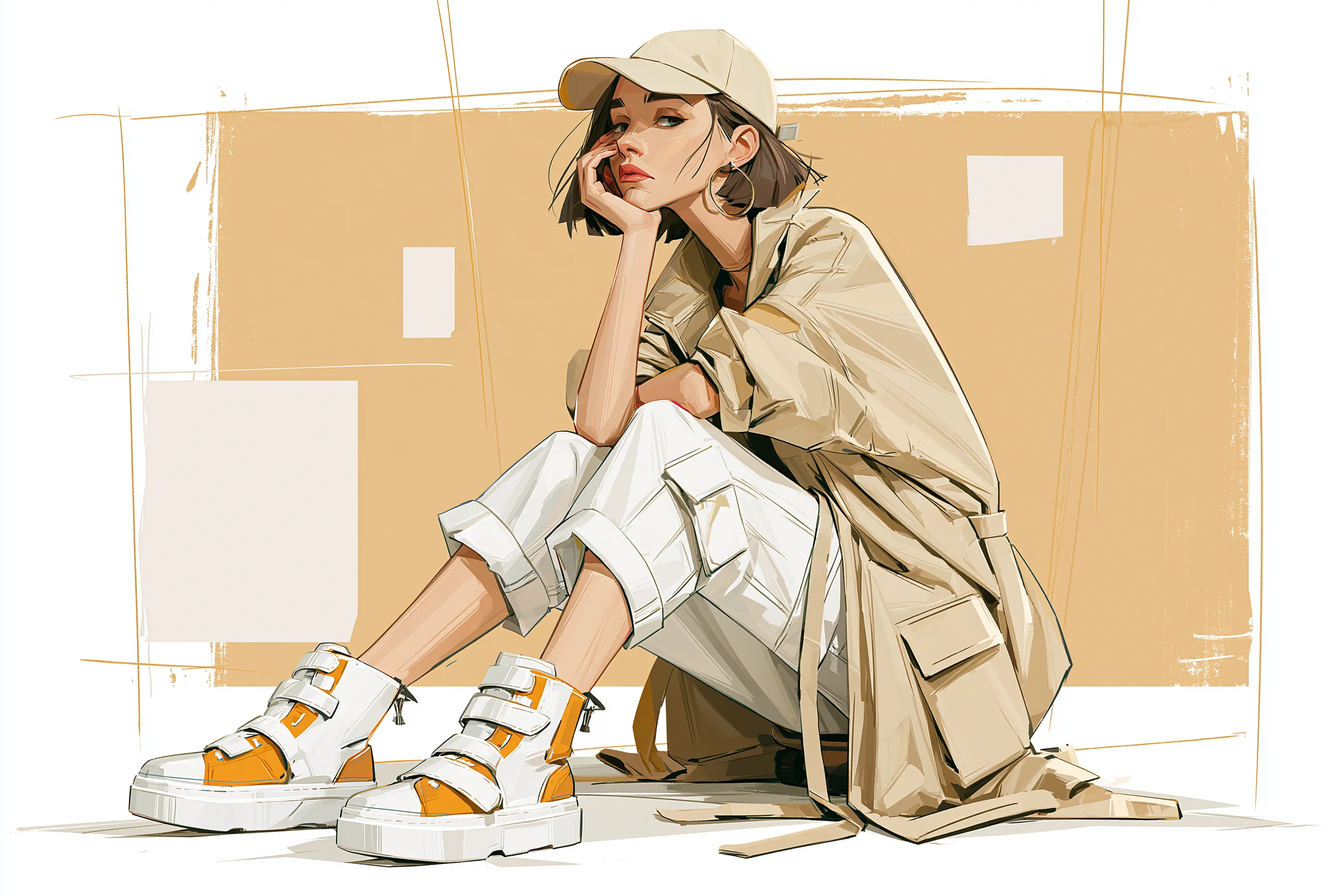
When I first figured out how to do this tuck correctly, I wasted so much time trying to make my shirt halves mirror each other perfectly.
But as Chen hinted above, that actually kind of defeats the purpose. The best, most stylish-looking tucks are the ones that don’t look like you actually tried hard. It took me awhile to realise why I wasn’t getting the same head-turning results I’d seen with my Test Shot #1 disaster outfit.
When I started doing lazy-ish; but still stylish!; partial tucks, that’s when my outfits started feeling expensive. Like I knew what I was doing, versus what I’m normally doing: just throwing clothes on. “It should look a little messy,” Chen insists.
“If you agonize too much over getting that perfect fold, you lose the entire illusion.” Think Marie Kondo’s idea of ironing versus your Grandma’s. The next time you open up your closet wondering why you have nothing to wear, try this instead of heading straight for your shopping cart: Grab some of those tried-and true wardrobe basics; plain button-ups, plain jumper, plain tees; and try tucking them in different ways. Play around with proportions and silhouettes, see how much you can transform the same shirt just by adjusting how you wear it.
You might be surprised how something as simple as….well, tucking in your shirt can make you look more expensive. You just have to know where to … and not tuck?